John Collett (buried 1931)

At a glance

At a glance
Surname: 
Collett
First name: 
John
Other Christian names: 
Gender: 
Male
Children: 
Unknown
Burial number: 
1487
Born: 
0/0/1848
Died: 
11/03/1931
Buried: 
14/03/1931
Occupation: 
Mat Trimmer; Auger Manufacturing; Bath Chair Man;
Heene Hallmark: 
No
Commonwealth War Grave: 
No

The Grave

The grave
Cemetery area: 
EB
Cemetery row: 
1
Cemetery plot: 
43
Burial remains: 
Unknown
The headstone
Endowed grave: 
No
Headstone inscription: 
Sacred to the memory of my dear Sarah beloved wife of John Collett died September 6th 1928 aged 85. Also of the above named John Collett died March 11th 1931 aged 82. At Rest
Grave location map

Life story

Life story

John was the son of Stephen an agricultural labourer and Grace a yarn quiller (she wound yarn onto spools).  John lived with his family until the 1860's. By 1870 he was in Brighton where he met Sarah Kent a housemaid. Sarah worked for William Ashburner who owned land in the British Colonies.  John and Sarah married in Brighton on 28 Mar 1870.  The couple decided that life might offer better opportunities in America. So, in Sep 1871, they sailed for New York on the steam ship Abyssinia. They settled in Hamden in Connecticut. John found work in a factory run by Auger who made tractors and agricultural machinery. John's brother Thomas also made the journey to America and worked in the same factory.  In 1888 John applied for American naturalization. The couple stayed in America until 1903 when they returned to England.  In 1911 they were living at 60 Lanfranc Road. John was employed as a bath chair man. By 1914 they were living at "Sunnydene" in Harrow Road.  Sarah died in the East Preston Union Workhouse in 1928, probably in the hospital wing.

John moved to 124 Tarring Road and died in 1931.  The couple had no children. John left an estate of £745.

Burial researcher: 
Carol Sullivan

Further information

Birth
Date born: 
00/00/1848
Marriage
Marriage 1
Spouse one first names: 
Sarah Erridge
Spouse one last name: 
Kent
Marriage one date: 
28/03/1870
Marriage one address: 
Brighton, Sussex, England

Death

Death (details)
Date of death: 
11/03/1931
Age (at time of death): 
82
Cause of death: 
Unknown
Address at time of death: 
124 Tarring Road, Worthing, Sussex, England
Personal effects
Executors: 
Richard Blake Hughes status: Solicitors Clerk
Probate pounds: 
£744

Census and miscellaneous information

Census information
1851 census: 

The Ark, Melksham

Stephen 31yrs agricultural labourer, Grace 34yrs yarn quiller, George 10yrs, Hannah 9 yrs, Jemima 7yrs, Emma 6yrs, John 3yrs, William 1yr.

1861 census: 

Broughton Road, Melksham

Stephen 41yrs agricultural labourer, Grace 46yrs, George 20yrs agricultural labourer, Emma 15yrs, John 13yrs mat trimmer, William 11yrs, Ellen 9yrs, Thomas 6yrs, Maria  5yrs, Frederick 3yrs

1881 census: 

In America

1880 US Census. Hamden. Conn.

John aged 32, working in Auger factory. Sarah aged 36, keeping house.


1891 census: 

In America.

1890 US Census destroyed in fire in 1921.

1901 census: 

In America.

1900 US Census. North Haven, Conn.

John aged 51, working in Auger manufacturing. Sarah E aged 57.

1911 census: 

60 Lanfranc Road, Worthing

John 63yrs bath chair man, Sarah aged 68

1921 census: 

Living at 124, Tarring Road, Worthing, Sussex.

John Collett Head Male 1848 73 Bathchairman Own Account
S E Collett Wife Female 1844 77 Home Duties
Miscellaneous information

Standard Augers
Standard Augers

Standard Augers

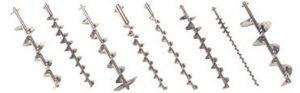
All standard Augers for AMS Filling Systems, All-Fill, Bartelt, Mateer and Spee Dee are in stock. Made of stainless steel and polished to a mirror finish, augers for filling machines are precision tools. Stems and O.D. Flights are exactly concentric. Our Augers are manufactured to OEM specifications for direct replacement in the specified filling machine

Bath Chair Man
Bath Chair Man

Bath Chair Man

Bath chairs were invented by James Heath of Bath in around 1750. They grew in popularity and by 1830 had replaced the sedan chair as a means of transport around towns. For journeys over greater distances in the late 19th and early 20th centuries people could hire a Coventry chair. This had a bicycle attached, which was pedalled by the operator.  Bath chairs were used to carry visitors around the spa town, from their hotels or lodging houses to the spa buildings. They could be hired like a taxi. The bath chair men gathered at a rank to wait for customers.

Yarn Quiller

Yarn Quiller

John Collett mother, Grace – a Quiller: Quills were a specific type of bobbin designed to fit into the shuttle of a Draper-style loom. A quiller operated the quiller machine, which wound yarn from cones or spindles onto bobbins. "Pouring up quills" meant removing empty bobbins from looms and reinserting them into the quiller machine.

Loom-Winder Tender

Tends winding units attached to looms that automatically wind yarn onto quills, transfers quills to loom shuttles, and strips bunched yarn from expended quills. Positions yarn packages on machine creel and threads yarn end through guides, tensions, and yarn carrier. Places empty quills in feed tray of winding unit. Patrols aisles between looms to detect malfunctions, such as jammed quills, broken yarn ends, exhausted yarn packages, and unstripped quills in reject tray. Straightens or removes jammed quills, ties broken yarn ends, replaces exhausted yarn packages, strips yarn from rejected quills by hand, and places stripped quills in feed tray.

Liverpool Journal 27th Jan 1849

DEATH OF THE FIRST POWER LOOM WEAVER

On tues last Mr Andrew KINLOCH, aged 89 died at the house of his son in Preston. In 1793 he set up the first power loom in Glasgow, with which the propelling power was his own hand, he managed after an outlay of 100 guineas to produce 90 yards of cloth. This sum, we may explain was jointly subscribed for the experiment by four members of Glasgow Chamber of Commerce. Shortly afterwards Andrew got the loom conveyed to Milton Print-field at Dumbuck where 40 looms on the same principle were erected under his special direction.. These machines can still be seen at POLLOCKSHAWS and PAISLEY. He left for England in 1800 setting up similar looms in different towns in Lancashire, the first at Stalybridge nr Manchester. Fifteen of these in a short time where moved to Westhoughton were they remained till 1812 when the hand loom weavers jealous of their interests being affected burned the factory to the ground along with 170 looms.