Of surviving life forms, the Bacteria are the most ancient, followed by the Archaea. These two groups, the Prokaryotes, lack a membrane-bound nucleus in their cells. From this lineage evolved the Eukaryotes, possessing a nucleus in their cells, two types of which evolved, the Unikonta, with a single appendage (flagellum) for propulsion, and the Bikonta, with two appendages (flagella). The Unikonta gave rise to first the Fungi, then the Animals. The Bikonta evolved into the Algae and Plants. The Fungi therefore share a common ancestor with the Animals, whereas neither is closely related to plants. For this reason, vegans and vegetarians should not eat mushrooms or other fungi, nor eat bread or consume alcoholic drinks because they are prepared using yeast, a fungus.
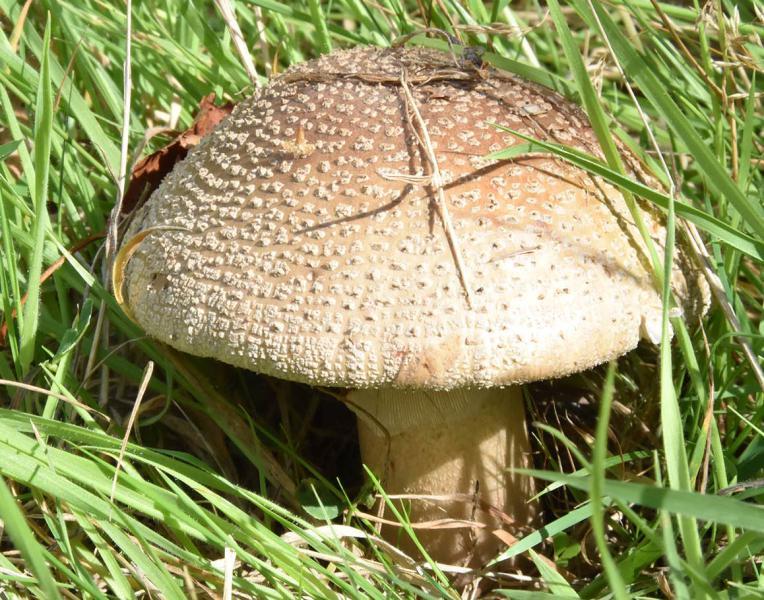
Colloquially, the word ‘mushroom’ is used for edible species and ‘toadstool’ for poisonous species, but there is actually no scientific distinction between these words. Mycologists, the scientists who study fungi, use the term ‘mushroom’ for all species that have the familiar fruiting bodies that we see above ground. Many fungal groups do not have fruiting bodies, and they have a terminology of their own.
Unlike plants fungi can’t make their own food, but must derive it from plants or animals, living or dead. Fungi called saprophytes serve an important function decomposing and recycling dead matter back into the soil. Symbiotic fungi grow on living organisms, but do not damage them, whereas parasitic fungi do harm their living hosts.